| Page 10 | Kisaco Research

Courts are applying heightened scrutiny to damages theories in pharmaceutical and biotech patent disputes, requiring closer alignment with regulatory realities, real-world market behaviour, and contemporaneous internal documents. This session explores how in-house teams and litigators are adjusting damages strategy in light of changing acceptance around lost-profits and reasonable-royalty analysis.

  • How to prove but-for causation where launch timing, labelling, or market access is uncertain (Amarin v. Hikma, 2024; Jazz v. Avadel, 2023-2024).
  • When to rely on internal forecasts and marketing records to test expert damages opinions (GSK v. Teva, 2021; Acorda v. Roxane, 2019).
  • Using damages analysis to guide settlement strategy and risk communication.

Author:

Damon Gupta

Senior Patent Counsel
Genentech

Damon Gupta is a Director, Patent Counsel at Spark Therapeutics, Inc., a leader in gene therapy and member of the Roche Group. With over a decade of experience in intellectual property (IP) law and a background in molecular biology, Damon advises biotechnology and pharmaceutical companies on patent strategy, IP transactions, and risk mitigation. At Spark, Damon leads efforts to protect proprietary assets, including trade secrets, manage IP disputes, and provides IP support to cross-functional teams, including R&D, manufacturing, and corporate transactions. Damon holds a J.D. from Chicago-Kent College of Law, an M.S. from Baylor College of Medicine, and a B.S. from The Ohio State University.

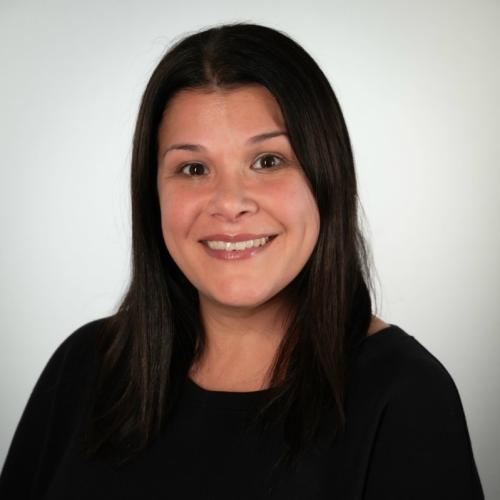
Damon Gupta

Senior Patent Counsel
Genentech

Damon Gupta is a Director, Patent Counsel at Spark Therapeutics, Inc., a leader in gene therapy and member of the Roche Group. With over a decade of experience in intellectual property (IP) law and a background in molecular biology, Damon advises biotechnology and pharmaceutical companies on patent strategy, IP transactions, and risk mitigation. At Spark, Damon leads efforts to protect proprietary assets, including trade secrets, manage IP disputes, and provides IP support to cross-functional teams, including R&D, manufacturing, and corporate transactions. Damon holds a J.D. from Chicago-Kent College of Law, an M.S. from Baylor College of Medicine, and a B.S. from The Ohio State University.

Join this session to hear litigators across pharma, biotech, MedTech and technology discuss how courts are deciding preliminary injunctions in recent patent cases. The workshop focuses on when to best leverage preliminary injunctions and compares outcomes and strategy across different key jurisdictions.

  • Review initial preliminary injunction outcomes from the UPC, and compare preliminary injunction success across key jurisdictions, including the UK, Canada, Brazil, and Germany.
  • Consider how DOJ and PTO statements of interest, such as in Radian Memory System, LLC v. Samsung Electronics Co. (E.D. Texas), may influence preliminary injunction strategy in the US.


How preliminary injunction strategy plays out in MedTech disputes, including cases such as Insulet Corp. v. EOFlow Co. (D. Mass. 2023), where injunctions can hinge on regulatory status, product launch timing, and supply disruption in device markets.

This interactive session walks attendees through the critical early-stage decisions that shape pharmaceutical and biotech patent litigation long before trial or settlement discussions begin. Using realistic case studies, panellists will react in real time to litigation and business pressures, allowing the audience to benchmark their own instincts against experienced in-house and outside counsel perspectives.

  • How companies decide where to litigate first (district court, PTAB, ITC, or parallel paths).
  • Early forum strategy trade-offs, including cost, speed, and leverage.
  • What evidence must be preserved immediately - and what is often missed.
  • How early litigation decisions affect settlement leverage, investor messaging, and payer dynamics.

Author:

David Schramm

Head of US IP Litigation
Bayer

David Schramm

Head of US IP Litigation
Bayer

Author:

Stephanie Lollo Donahue

Head of Global Patent Litigation
Sanofi

Stephanie Lollo Donahue

Head of Global Patent Litigation
Sanofi

This session provides a practical discussion on patent litigation trends and challenges in the MedTech sector, including NPE risk, competitor suits, and the litigation constraints created by regulatory frameworks. As devices increasingly integrate software, connectivity and AI, regulatory submissions, clinical data, and product approvals are becoming central to discovery, infringement theories, and evidentiary strategy in patent disputes. In this session, we will explore how these dynamics are shaping MedTech litigation strategy and what in-house counsel can do to prepare.

  • Why NPEs are increasingly targeting MedTech companies, particularly
  • Where devices incorporate software, connectivity, and third-party technologies.
  • How regulatory evidence shapes litigation strategy, including the role of FDA submissions, clinical trial data, and regulatory timelines.
  • The litigation challenges created by AI-enabled and software-driven devices, particularly around technical evidence, product functionality, and compliance with regulatory frameworks.

Author:

Bobby Hampton

Assistant IP Counsel
Hologic

Bobby Hampton

Assistant IP Counsel
Hologic

Author:

Denise Lane

Senior VP & Global IP
Olympus

Denise Lane

Senior VP & Global IP
Olympus

Author:

Gael Tisack

Chief IP Counsel
Abbott

Gael Tisack

Chief IP Counsel
Abbott

Sitting at the intersection of technology and healthcare, MedTech faces a distinct set of IP litigation challenges. This MedTech Leadership Breakfast brings senior IP MedTech leaders together to discuss the litigation risks specific to the sector and to benchmark strategy and best practices with peers

Recent Federal Circuit decisions are applying tighter limits to doctrine-of-equivalents arguments in pharma and biotech cases. This presentation explores where equivalence claims still succeed and how litigants are adjusting enforcement and design-around strategies accordingly.

Sitting at the intersection of technology and healthcare, MedTech faces a distinct set of IP litigation challenges. This MedTech Leadership Breakfast brings senior IP MedTech leaders together to discuss the litigation risks specific to the sector and to benchmark strategy and best practices with peers.

Recent Federal Circuit decisions are applying tighter limits to doctrine-of-equivalents arguments in pharma and biotech cases. This presentation explores where equivalence claims still succeed and how litigants are adjusting enforcement and design-around strategies accordingly.

Discuss how life sciences companies prepare for future patent disputes by refining early-stage litigation strategy, anticipating procedural risk, and strengthening internal readiness to improve outcomes.

Author:

John Cox

Partner
Barnes & Thornburg

With deep knowledge of issues facing the life sciences industry, John Cox counsels clients regarding their worldwide intellectual property rights and represents their patent interests when litigation arises, particularly regarding pharmaceutical, chemical, and biotechnology matters. John takes his role in protecting these important assets of life science innovators very seriously while approaching each matter with enthusiasm.


Through his ability to communicate effectively and succinctly, John advises on, develops, and carries out global IP strategies for the benefit of innovative companies, his clients, who are focused on developing core assets that save and improve the lives of patients. John enjoys leveraging his unique ability to put together targeted and enduring teams for each matter – paying close attention to each person’s strengths and skillsets and how they fit with one another, alongside his highly specialized experience and thoughtful and responsive nature.
John is intimately familiar with the pharmaceutical industry, having dealt with patent and IP subject matter ranging from brain chemistry, the gastrointestinal system, drug delivery systems and treatments of rare diseases and cancer to medical diagnostic methods, the generation of biofuel using bacteria, and processes for manufacturing chemicals and pharmaceutical products. He also has almost two decades of experience in Abbreviated New Drug Application (ANDA) cases, including pre-litigation investigations.

John offers guidance from the first step of a matter through to resolution, including all aspects of litigation. He has extensive experience related to discovery and motion practice, as well as in developing offensive and defensive strategies. He is well versed in dealing with complex subject matter and technical witnesses, such as inventors and experts.


John adeptly helps clients navigate the crossroads of foreign business practices and the complexities of U.S. patent practice, having worked with foreign pharmaceutical, chemical, and biotechnology companies throughout his career.

John Cox

Partner
Barnes & Thornburg

With deep knowledge of issues facing the life sciences industry, John Cox counsels clients regarding their worldwide intellectual property rights and represents their patent interests when litigation arises, particularly regarding pharmaceutical, chemical, and biotechnology matters. John takes his role in protecting these important assets of life science innovators very seriously while approaching each matter with enthusiasm.


Through his ability to communicate effectively and succinctly, John advises on, develops, and carries out global IP strategies for the benefit of innovative companies, his clients, who are focused on developing core assets that save and improve the lives of patients. John enjoys leveraging his unique ability to put together targeted and enduring teams for each matter – paying close attention to each person’s strengths and skillsets and how they fit with one another, alongside his highly specialized experience and thoughtful and responsive nature.
John is intimately familiar with the pharmaceutical industry, having dealt with patent and IP subject matter ranging from brain chemistry, the gastrointestinal system, drug delivery systems and treatments of rare diseases and cancer to medical diagnostic methods, the generation of biofuel using bacteria, and processes for manufacturing chemicals and pharmaceutical products. He also has almost two decades of experience in Abbreviated New Drug Application (ANDA) cases, including pre-litigation investigations.

John offers guidance from the first step of a matter through to resolution, including all aspects of litigation. He has extensive experience related to discovery and motion practice, as well as in developing offensive and defensive strategies. He is well versed in dealing with complex subject matter and technical witnesses, such as inventors and experts.


John adeptly helps clients navigate the crossroads of foreign business practices and the complexities of U.S. patent practice, having worked with foreign pharmaceutical, chemical, and biotechnology companies throughout his career.

Author:

Lauren Baker

Associate
Barnes & Thornburg

Lauren Baker

Associate
Barnes & Thornburg